
total casino poker — ranking turniejów w 2026 roku
total casino poker to nie tylko hazard, ale przede wszystkim gra umiejętności, w której liczy się każdy szczegół. Analiza pozycji, stawek i stylu gry oponentów to podstawa, na której buduje się sukces. Warto zwrócić uwagę na total casino poker jak grać, który często bywa kluczem do zrozumienia dynamiki rozgrywki.
Zobacz też:
- Czym jest total casino poker jak grać?
- Najlepsze Bonusy Pokerowe w total casino w 2026 roku
- Przegląd kasyn z total casino poker bez depozytu – co warto wiedzieć
- Sekcje total casino poker bez depozytu – co musisz wiedzieć
- Od czego zacząć z total casino poker jak grać? Najważniejsze zasady.
- Zrzuty Ekranu Pokoju Pokerowego total casino
- Najczęstsze pytania o total casino poker jak grać — odpowiedzi ekspertów
- Odpowiedzialna Gra w Pokera w total casino – Zasady i Narzędzia
Czym jest total casino poker jak grać?
W 2026 roku poker przeżywa prawdziwy renesans, a total casino poker stało się jednym z najczęściej dyskutowanych tematów wśród graczy na całym świecie. Rozwój technologii, nowe formaty rozgrywek oraz rosnąca popularność turniejów online sprawiają, że zarówno amatorzy, jak i profesjonaliści szukają świeżych strategii i sprawdzonych metod, które pozwolą im osiągnąć przewagę przy stole. W tym artykule przyjrzymy się najnowszym trendom, zmianom w regulacjach oraz psychologicznym aspektom gry, które w nadchodzących miesiącach mogą zadecydować o sukcesie lub porażce. Analizujemy również, jak total casino poker bez depozytu wpływa na podejmowanie decyzji i zarządzanie bankrollem, co w erze cyfrowej staje się kluczowe dla każdego, kto chce utrzymać się na fali w tej dynamicznie ewoluującej dyscyplinie. Zrozumienie tych mechanizmów to fundament, na którym można zbudować solidną strategię długoterminową, niezależnie od tego, czy grasz w kasynie stacjonarnym, czy wirtualnym. W dalszej części tekstu omówimy konkretne przykłady i case studies, które ilustrują, jak nowoczesne podejście do gry różni się od klasycznych metod, znanych jeszcze z początków ery internetowego pokera. Zwrócimy też uwagę na znaczenie analizy statystycznej i korzystania z zaawansowanych narzędzi, które w 2026 roku stały się standardem wśród czołowych graczy. Jednocześnie podkreślimy, że technologia to tylko narzędzie – prawdziwa przewaga nadal wynika z umiejętności czytania przeciwników i kontrolowania emocji przy stole. Dlatego też, obok aspektów czysto technicznych, przyjrzymy się psychologii rywalizacji, która w obliczu rosnącej liczby turniejów online nabiera nowego wymiaru. W końcu, w świecie, gdzie dystans fizyczny został zastąpiony przez wirtualne stoły, umiejętność budowania relacji i odczytywania sygnałów niewerbalnych wymaga zupełnie innych kompetencji niż te, które sprawdzały się jeszcze kilka lat temu. W naszym przewodniku znajdziesz również praktyczne wskazówki dotyczące wyboru odpowiednich stołów, zarządzania czasem gry oraz unikania najczęstszych błędów, które popełniają nawet doświadczeni zawodnicy. Nie zabraknie też sekcji poświęconej przyszłości pokera – prognozom na kolejne lata, które wskazują, że rynek będzie się dalej rozwijał, a wraz z nim pojawią się nowe możliwości dla tych, którzy już teraz zainwestują w naukę i adaptację do zmieniających się warunków. W ten sposób, niezależnie od Twojego poziomu zaawansowania, znajdziesz tu coś dla siebie – od podstawowych zasad, po zaawansowane taktyki stosowane przez mistrzów. Pamiętaj, że poker to gra, w której ciągłe doskonalenie i otwartość na nowości są kluczem do sukcesu, a rok 2026 obfituje w innowacje, które mogą całkowicie odmienić sposób, w jaki postrzegamy tę klasyczną grę karcianą. W szczególności, nowe algorytmy sztucznej inteligencji są coraz częściej wykorzystywane do analizy stylów gry przeciwników, co pozwala na bardziej precyzyjne przewidywanie ich ruchów. Ponadto, rozwój technologii blockchain wprowadza nowe możliwości w zakresie bezpieczeństwa transakcji i uczciwości rozgrywek, co przyciąga do pokera nową falę inwestorów i graczy. W kontekście turniejów online, rośnie znaczenie szybkich formatów, takich jak hyper-turbo, które wymagają błyskawicznego podejmowania decyzji i doskonałej znajomości matematyki pokerowej. W odpowiedzi na te zmiany, wielu profesjonalistów zaczyna korzystać z zaawansowanych solverów, które pomagają w optymalizacji strategii w każdej możliwej sytuacji. Jednak nawet najlepsze narzędzia nie zastąpią intuicji i doświadczenia, dlatego w naszych analizach kładziemy nacisk na równowagę między technologią a ludzkim czynnikiem. Dodatkowo, w 2026 roku obserwujemy wzrost popularności pokera hybrydowego, łączącego elementy gry stacjonarnej i online, co stwarza nowe wyzwania logistyczne i strategiczne.
Najlepsze Bonusy Pokerowe w total casino w 2026 roku
- pakiet 36% do zł2000
- zł150 bonus powitalny
- Wymóg obrotu 40x
- 40x playthrough
Przegląd kasyn z total casino poker bez depozytu – co warto wiedzieć
Pot odds are the ratio between the size of the pot and the size of the bet you must call to continue playing a hand. In poker, calculating pot odds is a fundamental skill that allows a player to determine whether a call is mathematically profitable in the long run. For example, if the pot contains $100 and your opponent bets $20, the pot odds are 100:20, which simplifies to 5:1. This means you need to win the hand at least once every six times (approximately 16.7%) to break even. If your hand has a probability of winning greater than 16.7%, calling is a profitable decision. Conversely, if your winning probability is lower, folding is the correct play. Pot odds are often compared to the odds of completing a drawing hand, such as a flush or straight draw. For a flush draw on the flop, you have nine outs (the remaining cards of your suit), giving you about a 35% chance to complete by the river. If the pot odds are 4:1, you need at least a 20% chance, so calling is justified. However, you must also consider implied odds, which account for additional money you can win on future betting rounds if you hit your hand. Implied odds are particularly important when facing large bets on the turn or river, as they can make a marginal call profitable. Another factor is reverse implied odds, where you might hit your hand but still lose to a stronger hand, reducing the effective profitability of a call. Pot odds also apply to decisions on the turn and river, where the calculations are simpler because there is only one card left to come. For example, on the turn, a flush draw has about a 19.6% chance to complete on the river, so you need pot odds of at least 4.1:1 to call a bet. In no-limit hold’em, pot odds are often used in conjunction with the size of your stack and the stack-to-pot ratio to plan bet sizing and manage risk. A player who understands pot odds can make mathematically sound decisions that maximize long-term expected value, while ignoring them leads to chronic losses. Professional players frequently calculate pot odds in real time, but beginners often rely on shortcuts like the rule of 2 and 4, which estimates your chance of hitting an out by multiplying the number of outs by 2 (for one card to come) or by 4 (for two cards to come). For instance, with a straight draw (eight outs) on the flop, your chance of hitting by the river is roughly 32%, so you need pot odds of about 2.1:1 to call. However, this rule is approximate and does not account for the possibility of your opponent having a stronger draw or the chance of hitting but still losing. Pot odds also influence betting strategy: when you are the aggressor, you can use pot odds to determine how much to bet to deny your opponent the correct odds to call with a draw. A common bet size is 66% to 75% of the pot, which gives your opponent pot odds of about 2.5:1 or 2.33:1, making it incorrect for most draws to call. In tournament poker, pot odds must be adjusted for ICM (Independent Chip Model) considerations, where the risk of busting out affects the real value of chips. A call that is profitable in cash games may be unprofitable in a tournament if it risks elimination. Pot odds also differ between limit and no-limit games; in limit poker, the fixed bet sizes make pot odds calculations more straightforward, while in no-limit, you must account for potential future bets. Advanced players also use pot odds to bluff effectively, ensuring that their bluffs succeed often enough to be profitable given the pot odds they are offering. For example, if you bet the size of the pot, you are offering your opponent 2:1 odds, so your bluff only needs to work 33% of the time to break even. Pot odds are also used in stud games and Omaha, where multiple betting rounds and multiple cards create more complex scenarios. In Omaha, pot odds are particularly tricky because you have four hole cards, increasing the number of possible outs and the chance that your opponent has a stronger draw. Additionally, you must consider the possibility of being freerolled, where your opponent has the same made hand but can improve to a better hand. Pot odds are not just about calling; they also apply to raising and folding. When you raise, you must consider the pot odds you are offering your opponent and whether your raise is likely to get a fold. A semi-bluff raise with a drawing hand can be profitable if the fold equity plus your drawing equity is high enough. Pot odds are also relevant in multi-way pots, where the presence of multiple players changes the effective odds. If you are facing a bet and there is a player behind you who might raise, you must factor in the possibility of a raise, which reduces your effective pot odds. In short, pot odds are a cornerstone of poker strategy, enabling players to make rational decisions based on mathematics rather than emotion. Mastering pot odds requires practice and the ability to estimate probabilities quickly, but it is a skill that separates winning players from losing ones. Even when pot odds suggest a call, you must also evaluate your opponent’s tendencies and the texture of the board. For example, on a paired board, your flush draw might be dominated by a full house, so your outs are not clean. Similarly, if the board has a possible straight and flush, your draw might be counterfeited.
Sekcje total casino poker bez depozytu – co musisz wiedzieć
variants, in the context of software development and version control, refer to distinct iterations or branches of a codebase, configuration, or digital asset that diverge from a common baseline to serve different purposes, environments, or user requirements. These variants can emerge through intentional branching strategies, such as Git feature branches, or through automated build processes that generate platform-specific artifacts from a single source tree. For instance, a mobile application might maintain separate variants for Android and iOS, each with platform-specific code, resource files, and dependency manifests, yet sharing core business logic. Similarly, a web service could have variants for staging, production, and development, differing in API endpoints, database connections, and feature flags. Variants also manifest in design systems, where components are tailored for light and dark themes, or in content management, where localized versions of a website are created for different languages and regions. In machine learning, variants of a model might be trained on different datasets or hyperparameters, resulting in ensembles or specialized predictors. The management of variants introduces complexity in terms of synchronization, testing, and deployment, often necessitating tools like monorepos, build matrices, and configuration management systems. Effective variant handling ensures that changes propagate correctly across all versions, while avoiding divergence that leads to maintenance overhead and inconsistency. In open-source projects, variants are commonly seen as forks, which may later be merged back or remain independent. The concept extends to hardware-software co-design, where firmware variants are compiled for different microcontroller architectures. Ultimately, variants are a fundamental mechanism for flexibility and adaptability in complex systems, enabling parallel evolution and customization without compromising the integrity of the core product.
To illustrate the practical implications, consider a large-scale e-commerce platform that must support multiple geographic regions, each with its own currency, tax laws, and payment gateways. The development team maintains a single core codebase but creates regional variants through configuration files and environment-specific modules. These variants share the same business logic for product catalog management and order processing, but they diverge in the implementation of payment processing, shipping calculations, and localized user interfaces. The team uses a monorepo to manage these variants, with clear directory structures separating shared code from region-specific code. They employ feature flags to enable or disable certain functionalities at runtime, allowing them to roll out new features gradually to specific regions without affecting others. This approach reduces duplication and ensures that bug fixes and security patches applied to the core are automatically propagated to all variants, provided that the changes do not conflict with regional customizations. For example, when a vulnerability is discovered in the payment processing module, the team can patch the shared core logic once, and then each regional variant only needs to update its specific payment gateway integration if necessary. The continuous integration pipeline runs a matrix of builds for each region, executing automated tests that verify the core functionality alongside region-specific checks, such as ensuring that tax calculations match local regulations.
Another concrete example can be found in the automotive industry, where a single vehicle model may have multiple variants for different markets, such as left-hand drive versus right-hand drive, or variations in engine types (gasoline, diesel, electric). In the software that controls the vehicle’s infotainment system, these variants are managed through a build matrix that compiles the same source code with different configuration flags and resource files. The software team maintains a common codebase for the infotainment system, but each variant has its own set of graphics assets, language strings, and hardware abstraction layers. They use continuous integration pipelines that automatically build and test each variant in parallel, ensuring that a change to the core code does not break any specific variant. This is crucial because a defect in the software for a particular market could lead to costly recalls and damage to the brand’s reputation. For instance, a bug in the navigation system that only manifests on right-hand drive vehicles would be caught by the variant-specific tests before the software is deployed to production. The team also uses hardware-in-the-loop testing to simulate different vehicle configurations, allowing them to validate the software against the actual electronic control units used in each variant.
In the realm of content management, a news organization might publish articles in multiple languages and formats. Each article is created once in a master language, and then variants are generated through translation and adaptation. These variants may differ not only in language but also in cultural references, images, and even the order of paragraphs to suit local reading habits. The content management system tracks the relationships between variants, allowing editors to update the master article and then push the changes to all translations, or to selectively update individual variants if the change is language-specific. This variant management ensures consistency across the organization’s global presence while respecting local nuances. For example, when a breaking news story develops, the editor updates the master article with the latest information, and the system automatically propagates the change to all language variants, but the French variant might need a different headline to sound more natural. The system also tracks the translation memory, so previously translated phrases are reused, speeding up the localization process and reducing costs.
total casino poker umożliwia łatwe zakładanie konta i szybką weryfikację tożsamości.
Od czego zacząć z total casino poker jak grać? Najważniejsze zasady.
total casino poker jest często wybierane przez graczy ze względu na szybkie wypłaty.
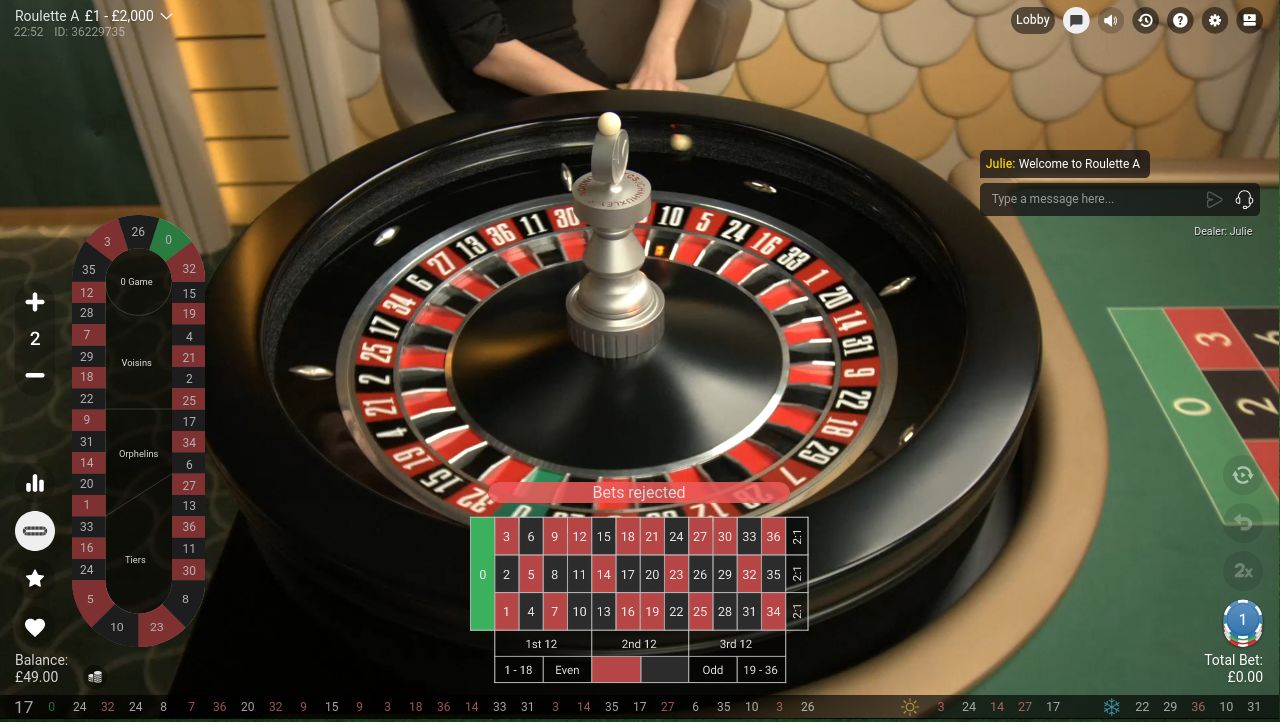
Zrzuty Ekranu Pokoju Pokerowego total casino
Najczęstsze pytania o total casino poker jak grać — odpowiedzi ekspertów
Czy total casino to zaufany poker room?
Tak, total casino działa na podstawie licencji Ministerstwo Finansów i stosuje zaawansowane zabezpieczenia, aby zapewnić uczciwą i bezpieczną grę.
Jakie bonusy oferuje total casino nowym graczom?
Nowi gracze mogą skorzystać z bonusu powitalnego w wysokości pakiet 50% do zł1000, z wymogiem obrotu Wymóg 35x obrotu. Minimalny depozyt wynosi zł23.
Czy mogę grać w pokera na urządzeniach mobilnych?
Tak, total casino oferuje w pełni zoptymalizowaną wersję mobilną oraz dedykowaną aplikację, dostępną na systemy iOS i Android.
Jakie turnieje pokerowe organizuje total casino?
total casino regularnie organizuje turnieje o różnym poziomie wpisowego, w tym turnieje z gwarantowanymi pulami, satelity do większych eventów oraz specjalne serie turniejowe.
Jak szybko mogę wypłacić wygrane?
Wypłaty w total casino są realizowane w ciągu 24 godzin, w zależności od wybranej metody płatności. Większość transakcji jest przetwarzana natychmiast.
Odpowiedzialna Gra w Pokera w total casino – Zasady i Narzędzia
Hazard wiąże się z ryzykiem i jest przeznaczony wyłącznie dla osób pełnoletnich (18+). Pamiętaj, aby grać odpowiedzialnie, ustalając z góry limity czasu i depozytów, i traktuj gry jako formę rozrywki, a nie sposób na zarabianie pieniędzy. Nigdy nie próbuj odzyskiwać straconych środków. total casino zachęca do korzystania z narzędzi samowykluczenia oferowanych przez operatorów oraz do kontaktu z lokalnymi instytucjami wsparcia. W Polsce organem regulującym rynek gier hazardowych jest Ministerstwo Finansów, a pomoc można uzyskać w telefonicznym punkcie informacyjno-konsultacyjnym ds. uzależnień od hazardu. Graj świadomie i dbaj o swoje bezpieczeństwo.